
You’ll need to budget between $15,000 and $80,000 for your tiny home build, with DIY construction falling on the lower end and professional builders on the higher end. Core materials like trailers ($2,800-$4,500), windows ($120-$250 each), and roofing ($1,000-$2,000) form your base expenses. Essential systems including HVAC ($1,800), plumbing ($400-$1,000), and electrical ($1,500-$3,000) add to your total. Understanding the complete cost breakdown reveals strategic ways to optimize your budget.
Key Takeaways
- Total tiny home costs range from $30,000 to $90,000, with DIY builds at the lower end and professional builds higher.
- Core building materials including trailer, windows, roofing, and doors typically cost between $15,000 and $25,000.
- Professional labor represents 40-60% of total costs, with builder fees ranging from $20,000 to $60,000.
- Essential systems (HVAC, plumbing, electrical) require $3,700 to $5,800 in combined expenses.
- Regulatory costs including permits, inspections, and utility connections average $2,000 to $5,000 depending on location.
Core Building Materials and Component Costs
The five essential components of a tiny home’s core building materials represent significant cost considerations in your construction budget. You’ll need to factor in the trailer cost first, ranging from $2,800 for a 20 ft model to $4,500 for a 30 ft option. Windows are another vital expense, with stock options starting at $120 and custom designs reaching $250 per unit.
For roofing materials, you’ll find ribbed metal options around $1,000, while standing seam metal roofs cost approximately $2,000. These provide better durability than traditional asphalt shingles. Door selection adds to your building expenses, with basic manufactured doors starting at $800 and premium options reaching $1,500. Additional fixtures complete your tiny home’s core components, including light fixtures, sinks, and shower stalls, ranging from $10 to $500 per item. Most tiny home builders should budget between $1,000 and $5,000 for these essential fixtures.
Labor and Professional Service Expenses
While material costs form the foundation of your tiny home budget, professional labor expenses typically constitute 40-60% of total building costs, making them an essential financial consideration. When hiring a builder, you’ll need to budget between $20,000 to $60,000, depending on your design’s complexity and customization requirements.
Opting for DIY building can dramatically reduce your overall budget, with material costs ranging from $10,000 to $30,000. However, you’ll still need to factor in specialty contractor rates for critical systems. Professional plumbing and electrical work costs vary greatly based on your project’s scope. Don’t forget to include building permits in your calculations, which typically range from $1,000 to $2,000, varying by location and local regulations.
Essential Systems and Infrastructure Planning
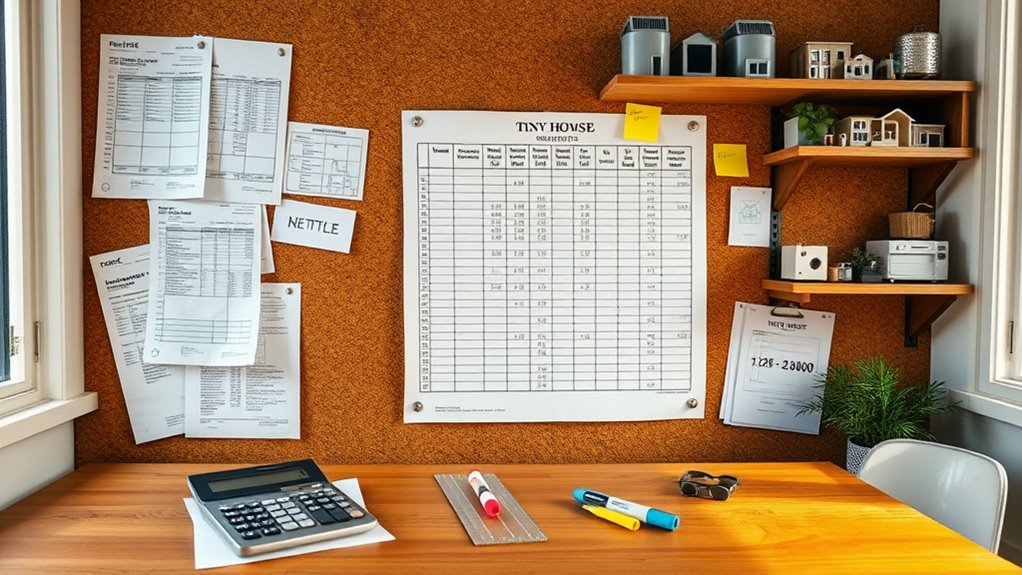
Planning essential systems in your tiny home requires careful consideration of three core components: plumbing, electrical, and HVAC infrastructure. You’ll need to budget $1,800 for HVAC systems and between $400 to $1,000 for plumbing fixtures, while electrical installations typically cost $1,500 to $3,000.
Your infrastructure planning must account for proper waste management through a septic system, which ranges from $3,000 to $10,000 depending on local regulations and soil conditions. Water supply systems require either municipal connections or water tanks, with tank costs varying from $200 to $1,500 based on capacity and material choice.
Don’t overlook the importance of energy-efficient building materials and quality insulation. While these components may increase your upfront costs, they’ll greatly reduce your long-term utility expenses. Remember that all essential systems must comply with local building codes, so you’ll need to factor in potential modifications to meet these requirements.
Regulatory Requirements and Associated Fees
Before starting your tiny home project, you’ll need to navigate a complex web of regulatory requirements that typically cost between $1,000 and $2,000 in permit fees alone. Local regulations and zoning laws will determine where you can place your tiny house, with rural areas offering more flexibility than urban locations. If you’re building on wheels, you’ll likely need RVIA certification to meet local standards.
Your overall budget must account for multiple building codes inspections throughout the construction process. These inspections guarantee compliance at various stages and can add unexpected delays and fees to your timeline. You’ll also need to factor in land use permits and utility connections, which can range from several hundred to several thousand dollars depending on your location. To avoid costly surprises, research your area’s specific requirements for water, electrical, and sewage connections before finalizing your construction plans.
Long-term Financial Considerations and Return on Investment
The long-term financial benefits of tiny home living extend far beyond initial construction costs and permits. You’ll find considerable long-term savings through reduced monthly utility costs, lower property taxes, and decreased maintenance expenses. While upfront costs for energy-efficient materials and appliances may be higher, they’ll markedly reduce your ongoing expenses.
To maximize your overall return on investment, consider installing renewable energy sources like solar panels, which can cut your monthly utility costs by 50-90%. You’ll need to budget for maintenance and upgrades, typically 1-2% of your home’s value annually, to protect your investment and guarantee lasting comfort. The reduced living expenses often enable you to work fewer hours, contributing to greater financial stability.
Your property taxes will likely decrease considerably, as tiny homes generally fall under lower assessment thresholds. By carefully planning these long-term financial considerations, you’ll optimize your tiny home’s economic benefits while maintaining its value.
Conclusion
You’ll find that designing your 120-square-foot dream tiny home for $25,000 isn’t quite as simple as those Pinterest boards suggest. While meticulously tracking every $2.50/sq ft of lumber and $150 permit fee, you’ve actually spent $65,000 – ironically enough to afford a down payment on a conventional house in many markets. Yet, you’re saving $1,247 annually on utilities, making this ‘affordable’ solution precisely what you needed.