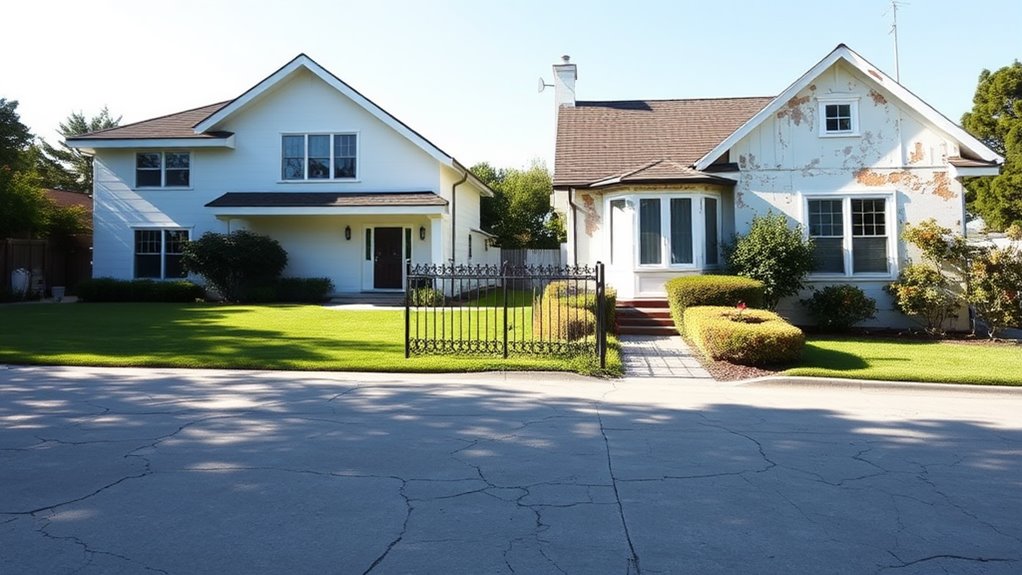
Investing in turnkey properties offers you a ready-to-rent, hassle-free option with immediate income, but it’s typically priced 10-20% higher than market value. Fixer-uppers, on the other hand, let you buy below market value, often saving 30-50%, but renovations can cost $10,000 to $100,000 and introduce risks like unexpected expenses and delays. While turnkeys suit passive investors, fixer-uppers appeal to those with renovation expertise. Exploring both further can help refine your investment strategy.
Key Takeaways
- Turnkey properties are move-in-ready, offering immediate rental income and minimal management for passive investors.
- Fixer-uppers require significant renovations but can be purchased below market value with high appreciation potential.
- Turnkey properties have higher upfront costs, while fixer-uppers involve unpredictable renovation expenses and delays.
- Turnkey suits beginners and time-constrained investors; fixer-uppers attract those with renovation expertise and risk tolerance.
- Financing differs: DSCR loans for turnkeys; fix-and-flip or hard money loans for fixer-uppers.
What Is a Turnkey Property in Real Estate?
A turnkey property in real estate is a fully move-in-ready investment, requiring no renovations or repairs before it can be rented out. These properties, often newly constructed or recently renovated, guarantee compliance with current safety and legal standards, making them ideal for passive investors seeking immediate rental income. Unlike a fixer-upper, a turnkey property eliminates the need for property management oversight during renovations or repairs, allowing you to focus solely on generating cash flow. However, the higher upfront costs associated with turnkey properties can reduce profit margins compared to fixer-uppers. Your rental income starts almost immediately, but you’ll need to guarantee the property’s cash flow meets the debt service coverage ratio (DSCR) requirements if you’re using DSCR loans. For investors prioritizing convenience and steady cash flow over hands-on involvement, a turnkey property offers a streamlined path to building long-term real estate wealth.
What Does a Fixer-Upper Entail?
Unlike turnkey properties, fixer-uppers demand considerable upfront effort and investment in repairs or renovations before they’re ready for occupancy or rental. These properties often require updates to major systems, such as electrical, plumbing, and HVAC, which can drive up costs. You’ll also face a range of repair needs, from cosmetic updates like painting and flooring to structural fixes or full remodels. To manage this, you must establish a detailed budget and timeline, accounting for potential overruns and delays. While fixer-uppers can be purchased below market value, the renovation process carries risks, including unexpected expenses and extended timelines. However, successful renovations can considerably boost the property value, particularly in emerging neighborhoods, offering a strong return on investment. Implementing the 70% rule can help ensure you pay no more than 70% of the after-repair value minus repair costs, maximizing profitability.
- Major Systems Overhaul: Addressing outdated electrical, plumbing, and HVAC systems is often non-negotiable.
- Cosmetic Repairs: Includes painting, flooring, and kitchen or bathroom updates.
- Structural Repairs: May involve foundation fixes, roof replacements, or wall reinforcements.
Key Advantages of Turnkey Properties

Turnkey properties offer several distinct advantages for investors seeking a streamlined and low-effort real estate investment. These move-in ready homes eliminate the need for renovations, enabling you to start generating rental income immediately. They are typically well-maintained, ensuring compliance with safety and legal standards, which minimizes unexpected repair costs. Turnkey investments also provide greater predictability in rental income and property appreciation, as they require minimal upfront work. This makes them ideal for passive investors, as property management companies can handle day-to-day operations, allowing for a hands-off approach. While the upfront costs may be higher compared to fixer-uppers, turnkey properties offer a streamlined process, enabling you to place the property in the rental market quickly and efficiently. Stay informed about local regulations to ensure compliance and avoid potential penalties.
| Advantage | Benefit |
|---|---|
| Move-in ready | Immediate rental income generation |
| Well-maintained | Reduced repair costs |
| Predictable ROI | Accurate estimation of rental income and appreciation |
| Passive investment | Property management handles operations |
| Streamlined process | Quick placement in the rental market |
Challenges Associated With Fixer-Uppers
While fixer-uppers can offer potential value, they present considerable challenges that can complicate your investment strategy. Unlike turnkey properties, which are ready for immediate use, a fixer-upper demands extensive renovation, often leading to unexpected costs and budget overruns. Data shows that 60% of homeowners experience budget overruns due to unforeseen repairs, which can strain your cash flow considerably. Additionally, the process of hiring reliable contractors can be time-consuming, and delays in renovations can prolong the period without rental income. This lack of income directly impacts your cash flow, especially if the renovation extends beyond your planned timeline. Moreover, fluctuations in the real estate market during the renovation can affect resale values or rental income potential, adding another layer of risk. Careful planning and constant monitoring of local market trends are essential to mitigate these challenges. It’s crucial to account for holding costs such as mortgage payments and utilities, which can quickly accumulate during prolonged renovations.
- Hiring skilled contractors often leads to delays and added expenses.
- Unexpected costs during renovations frequently result in budget overruns.
- Lack of rental income during extended renovations can strain cash flow.
Comparing Costs: Turnkey vs. Fixer-Upper Investments
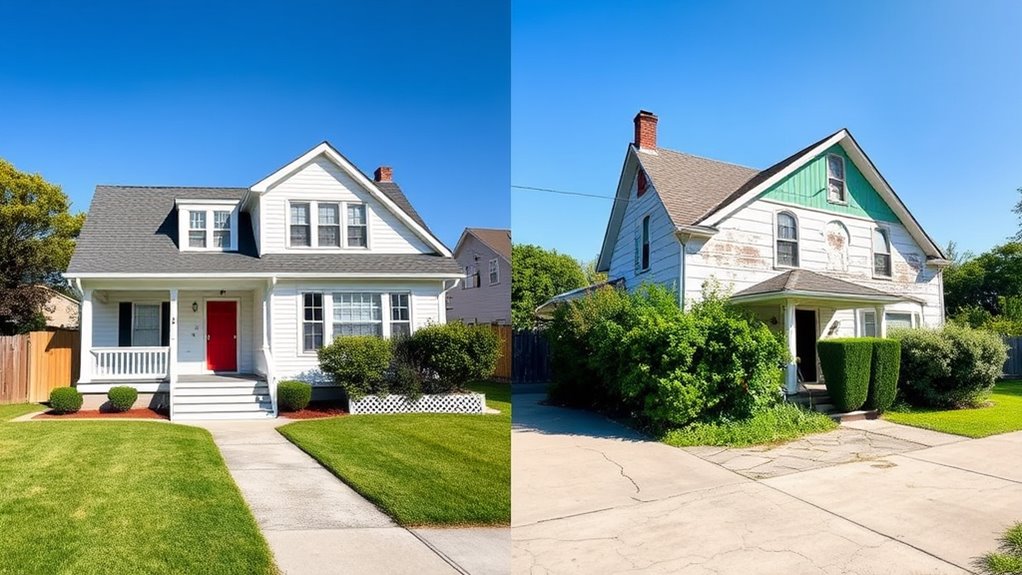
Turnkey properties demand a higher initial investment with premiums of 10-20% over fixer-uppers, which often sell below market value but require $10,000 to $50,000+ in renovations. Immediate cash flow from turnkeys offsets their upfront cost, while fixer-uppers delay income during renovations, potentially extending your ROI timeline. Long-term, fixer-uppers offer higher profit potential through value-added upgrades, but you’ll need precise cost control to mitigate risks like unexpected expenses or overruns. A comprehensive budget and financial management plan is essential to navigate the complexities of fixer-upper investments effectively.
Initial Investment Differences
When comparing initial investments, you’ll find that turnkey properties demand a higher upfront cost, often 10-20% above comparable fixer-uppers, due to their move-in-ready condition. In contrast, fixer-uppers can be purchased below market value, offering potentially 30-50% savings on initial costs. However, you must account for renovation costs, which can range from $10,000 to $100,000, depending on the property’s condition. Financing options also differ; turnkey properties typically qualify for DSCR loans based on cash flow, while fixer-uppers often require fix-and-flip loans covering both purchase and renovation expenses. Additionally, turnkey properties allow you to generate rental income immediately, whereas fixer-uppers may delay cash flow due to renovation timelines.
- Turnkey Properties: Higher initial investment, immediate rental income, and easier financing.
- Fixer-Uppers: Lower purchase price, significant renovation costs, and delayed cash flow.
- Financing: DSCR loans for turnkeys; fix-and-flip loans for fixer-uppers.
Long-Term Cost Implications
Choosing between a turnkey property and a fixer-upper involves weighing long-term financial implications, as each option presents distinct cost trajectories over time. Turnkey properties demand a higher upfront investment but often generate immediate rental income, helping you become cash-flow positive sooner. Their lower maintenance costs in the short term further enhance profitability. Fixer-uppers, while cheaper initially, carry unpredictable renovation costs, which can exceed estimates by 20-50%, delaying rental income and increasing long-term costs. However, successful renovations can greatly boost property value, potentially yielding higher returns. Hard money loans offer quick funding for extensive renovations, but their high interest rates can impact overall profitability. You’ll need to balance the risks of renovation costs with the potential for increased property value and evaluate whether the extended timeline aligns with your financial goals. Ultimately, your decision hinges on managing long-term costs while maximizing rental income and profitability.
Ideal Investors for Turnkey Properties
If you’re a passive income seeker, turnkey properties provide immediate rental returns without renovation delays. Time-constrained investors benefit from minimal property management demands, as these homes are move-in ready. Novice real estate buyers find turnkey investments appealing due to their lower risk and professional management support. Utilizing CRM systems for turnkey properties can further enhance tenant satisfaction and streamline rental operations efficiently.
Passive Income Seekers
Why are turnkey properties a top choice for passive income seekers? Turnkey properties provide immediate rental income without the need for extensive repairs or renovations, unlike fixer-uppers. This allows you to focus on cash flow and property management rather than time-consuming construction projects. With predictable income streams and potential appreciation, turnkey investments offer stability in your portfolio. Financing options like DSCR loans make it easier to acquire these investment properties by focusing on the property’s cash flow rather than your personal finances.
- Low maintenance: Minimal repairs mean you avoid costly and time-consuming renovations.
- Hands-off approach: Property management services streamline operations, maximizing passive income.
- Predictable cash flow: Steady rental income guarantees reliable returns on your investment.
Turnkey properties are designed for investors seeking hassle-free, consistent returns.
Time-Constrained Investors
Turnkey properties are particularly suited for time-constrained investors who prioritize efficiency and immediate returns. Unlike fixer-uppers, which demand extensive time and resources for renovations, turnkey properties are move-in ready, enabling you to generate immediate rental income. This eliminates delays in cash flow, ensuring your financial situation remains stable. Many turnkey real estate options include property management services, reducing your hands-on involvement and freeing you to focus on other investments or commitments. With predictable cash flow and minimal operational demands, these investment properties provide a hassle-free way to grow your portfolio. Additionally, the homes value is optimized from day one, maximizing your return potential without the uncertainties of renovation timelines. For time-constrained investors, turnkey properties offer a streamlined path to achieving consistent results in real estate.
Novice Real Estate Buyers
While novice real estate buyers might initially consider fixer-uppers for their lower upfront costs, turnkey properties often represent a more suitable option due to their immediate income potential and reduced operational complexities. Turnkey properties are typically in excellent condition, minimizing investment risks and allowing you to generate immediate rental income without the delays of renovations. Specialized companies often sell these properties and may offer additional services like property management, making them ideal for hands-off investors. However, be prepared for a higher upfront investment and increased market competition, as these properties attract more buyers.
- Immediate Rental Income: Turnkey properties are ready to rent, eliminating downtime.
- Reduced Investment Risks: Avoid unexpected renovation costs common in fixer-uppers.
- Predictable Appreciation: Evaluate market trends confidently with properties in prime condition.
Who Benefits Most From Fixer-Upper Investments?
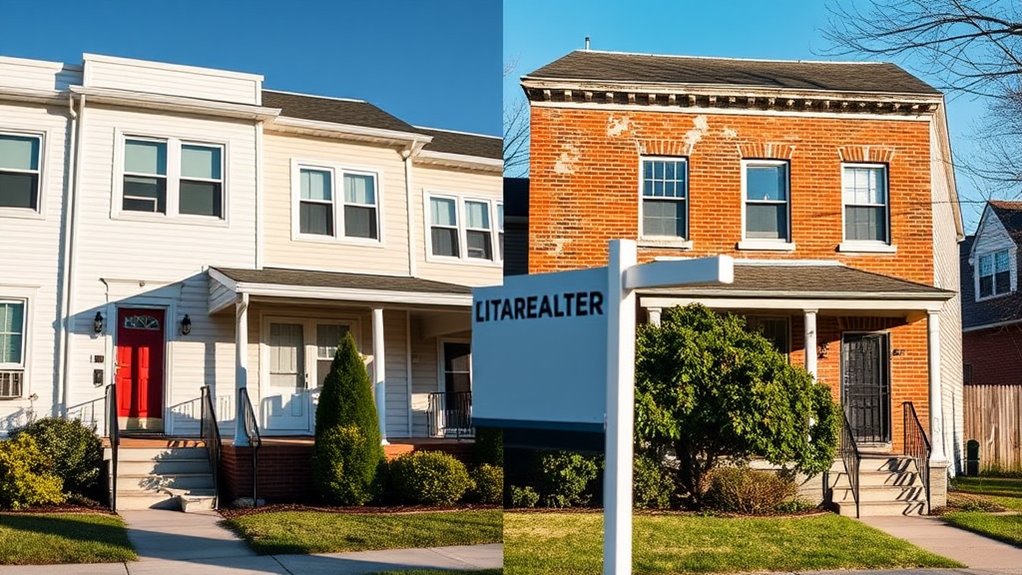
How can fixer-upper properties serve as a strategic investment for certain buyers? They allow you to acquire real estate below market value, offering substantial room for property value appreciation through renovations. Fixer-uppers attract investors with renovation expertise who turn dated homes into profitable properties while customizing them to meet market demands. These buyers often prefer up-and-coming neighborhoods, where post-renovation appreciation rates are higher compared to established areas. Additionally, fixer-uppers provide an affordable entry point into real estate, unlike costly turnkey properties, enabling you to build equity through strategic upgrades. However, you must prepare for unexpected costs and delays, as property management during renovations can be complex. Below, a table highlights key beneficiaries of fixer-upper investments:
| Beneficiary | Key Advantage |
|---|---|
| Experienced renovators | Maximize ROI through skill-based upgrades |
| Budget-conscious buyers | Lower initial cost vs. turnkey properties |
| Market-focused investors | Tailor renovations to meet tenant/buyer demand |
| Neighborhood speculators | Target appreciation in up-and-coming areas |
| Financially prepared investors | Handle unexpected costs and delays effectively |
Fixer-uppers suit those ready to leverage their skills, capital, and market insights for long-term gains.
Conclusion
When deciding between a turnkey property and a fixer-upper, consider your financial readiness, time, and expertise. Turnkey homes offer immediate returns with minimal effort, ideal for passive investors. Fixer-uppers, though time-intensive, can yield higher profits if managed strategically. As the adage goes, “You get out what you put in,” so weigh upfront costs against long-term gains. Data shows location, renovation budgets, and market trends are critical factors in maximizing your investment’s potential.