House hacking Airbnb lets you rent out part of your primary residence to generate income, offering higher nightly rates than traditional rentals. You can maximize earnings by targeting high-demand areas, using dynamic pricing, and investing in property upgrades. Focus on legal compliance, guest communication, and maintenance to guarantee success. Tailoring your strategy to market trends and using tools like Mashvisor can boost profitability. Explore further to uncover key insights for optimizing your investment.
Key Takeaways
From the BACKGROUND content provided, here are 5 key points that answer the search intent for “House Hacking Airbnb”:
- House hacking involves renting out part of your primary residence to generate income and build equity.
- Use dynamic pricing to maximize revenue during peak travel seasons.
- Obtain necessary permits and ensure compliance with local zoning and tax laws.
- Invest in unique amenities like hot tubs to increase property appeal and value.
- Focus on high-demand locations or emerging markets for consistent Airbnb bookings.
Edited to be:
- Rent out part of your primary residence to generate income and build equity.
- Maximize revenue with dynamic pricing during peak travel seasons.
- Ensure compliance with local zoning and tax laws.
- Invest in amenities like hot tubs to increase property appeal.
- Target high-demand or emerging markets for consistent bookings.
Understanding the Concept of House Hacking Airbnb
House hacking Airbnb is a strategic approach to generating income by renting out part of your primary residence through the platform. You can free up cash flow by leveraging unused spaces like spare rooms, basements, or detached units. Airbnb house hacking lets you capitalize on short-term rental demand, turning your home into a source of recurring revenue. To succeed, you’ll need to invest in upgrades or renovations to make the space appealing to guests. Location plays a critical role; areas with high tourism or business traffic tend to attract more bookings. Before diving in, you must guarantee compliance with local zoning laws and Airbnb policies to avoid penalties. By intelligently managing your property, you can maximize occupancy rates and create a steady income stream. This approach requires strategic planning, but when executed well, Airbnb house hacking can substantially reduce your housing costs. Incorporating unique amenities such as a hot tub or eco-friendly practices can significantly enhance your property’s appeal and booking potential.
Financial Benefits of Airbnb House Hacking
You can substantially increase your cash flow by renting out a portion of your property on Airbnb, often surpassing traditional rental income. This strategy accelerates equity building as your rental earnings help cover mortgage payments and property appreciation compounds over time. Additionally, you’ll benefit from tax deductions on expenses like maintenance, utilities, and furnishings, reducing your overall tax burden. Implementing dynamic pricing strategies can further maximize your revenue during peak travel seasons.
Increased Cash Flow
Increased cash flow is a compelling advantage of Airbnb house hacking, offering substantial financial benefits by leveraging unused spaces in your property. By renting out extra rooms or basement apartments, you can generate over $10,000 annually. Unlike long-term rentals, short-term Airbnb stays often yield higher nightly rates, maximizing your rental income. This income stream can cover 100% of your mortgage payments, turning your property into a cash-flow-positive asset. Achieving Superhost status can boost bookings by up to 40%, further increasing your earnings. Airbnb’s dynamic pricing model guarantees you capitalize on peak seasons and high-demand periods. Strategically managing these opportunities creates financial freedom, allowing you to reinvest or save for future goals. Monitoring cash flow ensures consistent profitability and identifies areas for financial improvement.
| Factor | Impact | Benefit |
|---|---|---|
| Short-term rentals | Higher nightly rates | Increased rental income |
| Superhost status | Up to 40% more bookings | Consistent cash flow |
| Dynamic pricing | Optimized rates for peak seasons | Maximized earnings |
| Leveraging unused spaces | Additional income streams | Financial freedom |
| Mortgage coverage | 100% payment coverage | Cash-flow-positive property |
Equity Building
Leveraging Airbnb house hacking accelerates equity building by transforming rental income into mortgage payments. When you use your rental property for short-term stays, you often generate higher nightly rates than traditional long-term leases, enabling faster mortgage principal reduction. This consistent rental income directly contributes to building equity by lowering your outstanding loan balance. Additionally, the property’s value may appreciate over time, further increasing your equity. By reinvesting Airbnb profits into property upgrades, you enhance its appeal and market value, compounding your equity growth. House hacking with Airbnb not only offsets your housing costs but also positions you to accumulate wealth through strategic equity building. Evaluating Cash-on-Cash Return ensures you maximize returns from your Airbnb house-hacking strategy. This approach turns your rental property into a tool for financial advancement, ensuring you maximize returns while minimizing personal expenses.
Tax Deductions
Airbnb house hacking offers substantial financial advantages through strategic tax deductions. You can deduct expenses like mortgage interest, property taxes, insurance, and repairs to reduce taxable rental income. Depreciation of your property used for Airbnb rentals can also be claimed over several years, further lowering your tax burden. Additionally, utilities, cleaning fees, Airbnb service fees, and even travel expenses for managing the property qualify as deductible costs. To maximize these benefits, maintain meticulous records of all income and expenses. Proper documentation guarantees accurate tax reporting and helps you avoid missed opportunities. By leveraging these deductions, you can greatly offset the costs of maintaining your rental property, enhancing your overall profitability. This strategic approach turns routine expenses into valuable financial tools, making house hacking a smarter investment. Investing in residential properties through an IRA can also provide tax-deferred or tax-free growth, further enhancing your long-term financial strategy.
Selecting the Right Property for Airbnb House Hacking
You’ll want to target areas with high tourist traffic or strong short-term rental demand to guarantee consistent bookings. Use tools like Mashvisor to assess potential rental income and occupancy rates before investing. Focus on properties with below-market prices or those requiring minimal renovations to optimize your return on investment. Consider emerging markets like Fairbanks and Broken Bow, which offer lower competition and high growth potential.
Ideal Location Criteria
Selecting the right location is a critical first step in guaranteeing your Airbnb house hacking strategy succeeds. Focus on tourist-friendly areas with high demand for short-term rentals to maximize occupancy and income. Prioritize locations near attractions like beaches, city centers, or hiking trails to sustain consistent bookings. Conduct a thorough market analysis using tools like Mashvisor’s heatmap to identify neighborhoods with higher Airbnb cap rates and profitability. Verify local regulations permit short-term rentals, avoiding cities with strict bans or restrictions. Choose properties with easy access to public transport, restaurants, and shopping to enhance guest satisfaction and reviews. Consider selecting properties with green buildings to reduce operating costs and attract eco-conscious guests. By strategically targeting high-demand areas with favorable regulations and amenities, you’ll position your property for long-term success in the short-term rental market.
Property Value Analysis
Before diving into Airbnb house hacking, it’s essential to evaluate the property’s worth to guarantee it aligns with your financial objectives. Start with a detailed property analysis by comparing recent sales of similar homes in the area to determine fair market value. Assess Airbnb occupancy rates and average nightly rents in the neighborhood to gauge income potential. Consider factors like property condition, location, and proximity to attractions, as these greatly impact value. Real estate investors often calculate cap rates and cash-on-cash returns to evaluate investment viability. Tools like Mashvisor’s heatmap can help identify high-performing cities and neighborhoods for Airbnb. By combining these metrics, you’ll make an informed decision, ensuring the property maximizes returns while fitting your house-hacking strategy. Utilizing off-market properties can also provide investment opportunities with reduced competition.
Legal Considerations for Short-Term Rentals

Several legal factors must be assessed to operate a short-term rental successfully. First, verify local zoning laws to guarantee your real estate is eligible for short-term rentals. Many areas impose restrictions, so confirming compliance prevents costly penalties. Next, obtain permits or licenses required by your city or municipality; these often vary by location and are essential for lawful operation. Check your homeowners’ association (HOA) rules, as many prohibit short-term rental properties or impose strict guidelines. Violating these can lead to fines or eviction. Additionally, adhere to occupancy tax laws by collecting and remitting taxes to local authorities. This secures compliance and avoids legal issues. Finally, draft a rental agreement that aligns with state and local laws to protect yourself from disputes with guests. Addressing these legal considerations upfront safeguards your rental properties and assures a smooth operation.
Comparing Airbnb vs. Long-Term Rental Strategies
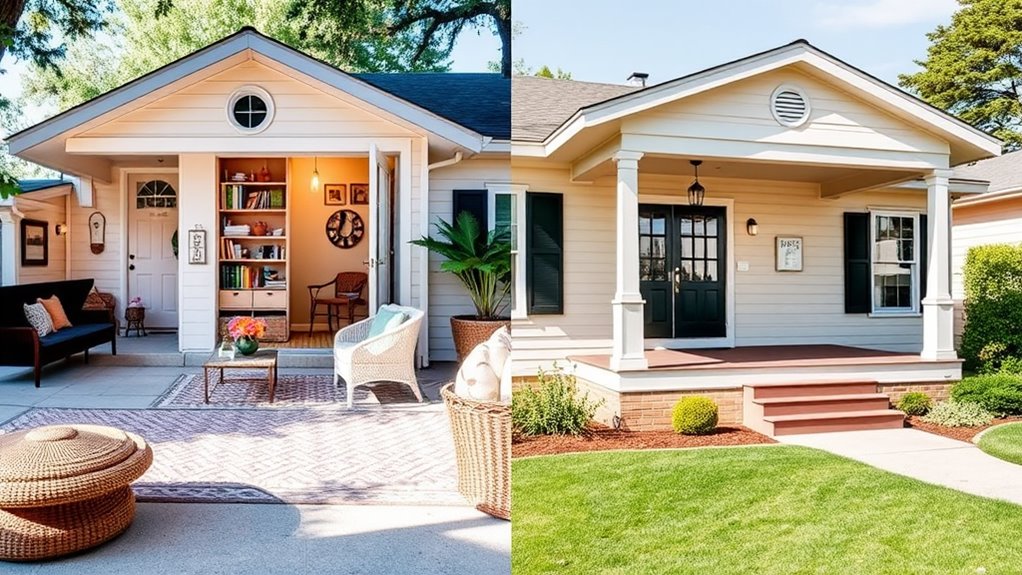
When considering Airbnb versus long-term rental strategies, it’s important to weigh the financial and operational differences. Airbnb rentals often yield higher returns due to variable pricing during peak seasons, but they come with higher operational costs like cleaning and frequent maintenance. Long-term rentals, on the other hand, provide stable, predictable income with fewer turnovers, reducing vacancy risks. Real estate investing in either strategy requires understanding local regulations, as Airbnb properties often face stricter zoning laws.
- Income Potential: Airbnb averages $44,235 annually, while long-term rentals bring in $31,020.
- Operational Effort: Airbnb demands more active management; long-term rentals are more hands-off.
- Regulatory Hurdles: Airbnb faces tighter local restrictions compared to traditional leases.
Your choice depends on whether you prioritize higher returns and flexibility or steady income and reduced effort in real estate.
Managing Guest Relationships and Property Maintenance

While managing guest relationships and property maintenance can be challenging, it’s essential for maximizing Airbnb profitability and guaranteeing positive reviews. Start by establishing clear house rules and communicating them effectively to prevent misunderstandings. Use automated messaging tools to streamline communication, providing check-in instructions and addressing inquiries promptly. Regularly inspect the property between bookings to address maintenance issues and secure a clean, welcoming environment. Invest in durable, high-quality furnishings and appliances to reduce wear and tear, minimizing long-term costs. Keep a detailed log of guest interactions and property incidents to track patterns, resolve disputes, and improve future experiences. Here’s how these actions impact your success:
| Action | Emotional Impact |
|---|---|
| Clear house rules | Guests feel respected and secure |
| Prompt maintenance | Guarantees comfort and satisfaction |
| Automated communication | Reduces stress and builds trust |
| Detailed incident logs | Provides clarity and accountability |
Strategic execution of these practices secures smoother operations and happier guests.
Impact of COVID-19 on Airbnb House Hacking
COVID-19 reshaped the landscape of Airbnb house hacking, forcing hosts to adapt swiftly to unprecedented challenges. With bookings plummeting by over 70% in some areas, you had to rethink your strategy to maintain income. Pivoting to long-term rentals or corporate housing became essential as travel restrictions reduced demand for short-term stays. Meanwhile, stricter cleaning protocols drove up operational costs, squeezing margins further. Here are the key shifts you needed to navigate:
- Shift in Demand: Suburban and rural properties gained traction as remote work prompted guests to seek longer stays away from urban centers.
- Financial Pressures: Rising housing costs and low interest rates complicated refinancing options, making it harder to cover mortgages amid income instability.
- Regulatory Uncertainty: Eviction moratoriums and government relief programs added complexity, forcing you to reassess reliance on Airbnb income.
Adapting to these changes required flexibility and a strategic approach to sustain your house-hacking goals during the pandemic.
Tools and Resources for Analyzing Airbnb Investments

Analyzing Airbnb investments effectively requires leveraging the right tools to assess profitability and mitigate risks. Start with Mashvisor’s Airbnb calculator to evaluate rental income, occupancy rates, and ROI for specific properties in your target real estate market. AirDNA’s market research tools provide unlimited access to data on high-demand areas, pricing trends, and competitor performance, helping you identify lucrative opportunities. Use Zillow’s heatmap feature to pinpoint neighborhoods with strong rental potential and affordable property prices, guaranteeing you invest wisely. Optimize your pricing strategy with Pricelabs’ dynamic pricing tool, which adjusts rates based on seasonality and local demand to maximize revenue. Finally, guarantee compliance by analyzing local zoning laws and Airbnb regulations through platforms like Host Compliance. These tools collectively empower you to make data-driven decisions, minimize uncertainties, and reveal the full potential of your Airbnb investment strategy.
Real-Life Success Stories in Airbnb House Hacking

House hacking through Airbnb has proven to be a viable path for building wealth, as demonstrated by Chris and Jesteny’s basement unit success. Starting in March 2020, they transformed their basement into a profitable Airbnb listing, achieving Superhost status consistently. With a modest remodeling investment, they generated $10,000 annually, showcasing the potential of leveraging underutilized spaces in real estate. Their adaptability during COVID-19 guaranteed sustained profitability, proving resilience in volatile market conditions.
- Optimized Pricing Strategies: They dynamically adjusted rates to maximize income, securing competitiveness while maintaining profitability.
- High Cleaning Standards: Consistent cleanliness led to positive reviews and repeat bookings, enhancing their reputation on the platform.
- Scalability: Their Airbnb success provided the financial foundation to purchase standalone rental properties, illustrating how house hacking can scale into broader real estate ventures.
Conclusion
House hacking Airbnb seems like a brilliant idea—until you’re vacuuming confetti at 2 AM for the fifth time this month. Sure, you’ll monetize your space, but you’ll also become a full-time referee for noise complaints. Strategically, it’s a win; practically, it’s a crash course in patience. Analyze your property, weigh the benefits, and embrace the irony: you’re not just a host, you’re a glorified janitor with a side hustle. Welcome to the grind.